Are the Ten Commandments Still Valid Today?
Are the Ten Commandments still valid today or were they abandoned at the cross as some claim? What was the purpose of the Ten Commandments and why did God give them to us? Are they still of any value to us today? And since this law was not given until Exodus 20, were Adam and Eve keeping them? Since there is so much controversy over God’s Commandments, let’s see what the Bible actually does say about this law that was given in such fiery majesty by God Himself?
Thunders and Lightnings: The Awe-Inspiring Giving of the Law
One can only imagine what a magnificent event it must have been when God gave His Commandments. Exodus 19:16-22 describes the scene as we work up to this magnificent event, “And it came to pass on the third day in the morning, that there were thunders and lightnings, and a thick cloud upon the mount, and the voice of the trumpet exceeding loud; so that all the people that was in the camp trembled. 17 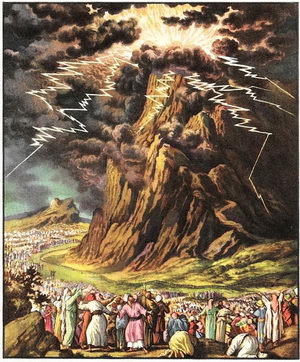 And Moses brought forth the people out of the camp to meet with God; and they stood at the nether part of the mount. 18 And Mount Sinai was altogether on a smoke, because the LORD descended upon it in fire: and the smoke thereof ascended as the smoke of a furnace, and the whole mount quaked greatly. 19 And when the voice of the trumpet sounded long, and waxed louder and louder, Moses spoke, and God answered him by a voice. 20 And the LORD came down upon Mount Sinai, on the top of the mount: and the LORD called Moses up to the top of the mount; and Moses went up. 21 And the LORD said unto Moses, Go down, charge the people, lest they break through unto the LORD to gaze, and many of them perish. 22 And let the priests also, which come near to the LORD, sanctify themselves, lest the LORD break forth upon them.”
Exodus 20:1 then tells us that God personally spoke the words of the Ten Commandments Himself, “And God spoke all these words, saying…” It was such an awesome event that the people felt they would die for fear. Exodus 20:18-19 describes more of this event never seen again in history, “And all the people saw the thunderings, and the lightnings, and the noise of the trumpet, and the mountain smoking: and when the people saw it, they removed, and stood afar off. 19 And they said unto Moses, Speak you with us, and we will hear: but let not God speak with us, lest we die.” When has God ever done anything else as astounding as this glorious and mind-blowing event? You can only imagine what it would have been like witnessing such an inconceivable display beyond the comprehension of the human mind. One would have to envisage that the words of the Ten Commandments must be very important when God personally delivered them in such an awe-inspiring way that has never been seen before or again. Below are the words thundered from the mountaintop, by God Himself, directly to the people as they trembled in fear, with smoke and fire and lightning flashing all around while the very mountain itself quaked greatly. Can you even begin to imagine such an event?
Exodus 20:2-17 “I am the LORD your God, which have brought you out of the land of Egypt, out of the house of bondage. 3 You shall have no other gods before me. 4 You shall not make unto you any graven image, or any likeness of any thing that is in heaven above, or that is in the earth beneath, or that is in the water under the earth: 5 You shall not bow down thyself to them, nor serve them: for I the LORD your God am a jealous God, visiting the iniquity of the fathers upon the children unto the third and fourth generation of them that hate me; 6 And showing mercy unto thousands of them that love me, and keep my commandments. 7 You shall not take the name of the LORD your God in vain; for the LORD will not hold him guiltless that taketh his name in vain. 8 Remember the Sabbath day, to keep it holy. 9 Six days shall you labour, and do all your work: 10 But the seventh day is the Sabbath of the LORD your God: in it you shall not do any work, you, nor your son, nor your daughter, your manservant, nor your maidservant, nor your cattle, nor your stranger that is within your gates: 11 For in six days the LORD made heaven and earth, the sea, and all that in them is, and rested the seventh day: wherefore the LORD blessed the Sabbath day, and hallowed it. 12 Honour your father and your mother: that your days may be long upon the land which the LORD your God giveth you. 13 You shall not kill. 14 You shall not commit adultery. 15 You shall not steal. 16 You shall not bear false witness against your neighbour. 17 You shall not covet your neighbour’s house, you shall not covet your neighbour’s wife, nor his manservant, nor his maidservant, nor his ox, nor his ass, nor any thing that is your neighbour’s.”
Thus we see that God Himself revealed the core of His standards long ago at Mount Sinai through the Ten Commandments, standards that reflect His very own character and nature. 1 John 4:7-8, “Beloved, let us love one another: for love is of God; and every one that loveth is born of God, and knows God. 8 He that loveth not knows not God; for God is love.” Jesus founded Christian faith on the principle of love. One of Christ’s disciples and closest friends, John wrote these words near the end of his life: 1 John 4:16, “And we have known and believed the love that God has to us. God is love; and he that dwelleth in love dwelleth in God, and God in him.”
So what is love? Ask someone to define it, and you’ll notice that people describe it in very different ways. Some speak of love as a feeling, others as caring for someone, yet they often cannot explain what “caring” actually means. Sadly, many reduce love to nothing more than sexual attraction. It becomes obvious that love does not mean the same thing to everyone. Imagine how different things would be if we all used a consistent, meaningful definition of love, especially when talking about God’s love for us and the love we are called to show one another.
Many Christians embrace the idea of loving others as themselves, yet remain unaware of how the Bible actually defines love. As a result, they often fail to understand the necessity of applying the biblical principles that determine the success or failure of their relationships. For love to be genuine and meaningful, it must be clearly defined and properly understood. That is precisely the purpose of the Ten Commandments.
Defining Love: Why the Commandments are Necessary Today
Jesus explained that the purpose of God’s Commandments is to teach us how to live out the two great principles: loving God and loving one another. He made this clear when a lawyer tried to trap Him when he said, “Master, which is the great commandment in the law?” Jesus responded, “You shall love the Lord your God with all your heart, and with all your soul, and with all your mind. This is the first and great commandment. And the second is like unto it, You shall love your neighbour as thyself. On these two commandments hang ALL the law and the prophets.” Matthew 22:35:40
Why can’t some people grasp that “ALL the Law and the Prophets,” is God’s moral law and those scriptures we know as the Old Testament that show us the right way to love by demonstrating the problems and consequences that come from a lack of love?
Moses said in Deuteronomy 10:12-13, “And now, Israel, what does the LORD your God require of you, but to fear the LORD your God, to walk in all his ways, and to love him, and to serve the LORD your God with all your heart and with all your soul, 13 To keep the commandments of the LORD, and his statutes, which I command you this day for your good?” Love simply summarizes the intent of the Commandments. In Romans 13:9-10 Paul defined “loving your neighbour as yourself” as a saying that covers the smaller detail not described in the Ten Commandments, “For this, You shall not commit adultery, You shall not kill, You shall not steal, You shall not bear false witness, You shall not covet; and if there be any other commandment, it is briefly comprehended in this saying, namely, You shall love your neighbour as thyself. 10 Love worketh no ill to his neighbour: therefore love is the fulfilling of the law.”
In today’s world we see terrorism, murder, rape, child and spousal abuse, and countless other forms of violence. Many of us no longer feel safe enough to leave our doors unlocked at night. The peace and harmony we long for are impossible without genuine love and respect. If God were to grant us eternal life without first teaching us how to love one another, He would be consigning us to live forever in confusion and chaos. If the world today followed God’s Commandments and the principles found throughout the Old and New Testaments, we would experience a level of peace and harmony beyond anything we can imagine. God cannot permit the hostility and selfishness so prevalent in humanity to continue into eternity. We must learn the true meaning of love, otherwise we cannot receive eternal life. 1 John 3:14-15, “We know that we have passed from death unto life, because we love the brethren. He that loveth not his brother abideth in death. 15 Whosoever hateth his brother is a murderer: and you know that no murderer has eternal life abiding in him.” So this brings us back to the question of what is love. John tells us in 2 John 1:6, “And this is love, that we walk after his commandments. This is the commandment, That, as you have heard from the beginning, you should walk in it.”
The Two Laws: Distinguishing Moral Law from Ceremonial Bondage
Today there is widespread misunderstanding when it comes to distinguishing between the Ten Commandments and the old ceremonial law that pointed forward to Christ. That ceremonial system came to an end when the true Passover Lamb declared, “It is finished,” and bowed His head in death. At that very moment, an unseen hand tore the temple curtain from top to bottom, signifying the end of the temporary sacrificial system. That system is described by Paul as being a law of bondage and servitude, Galatians 4:8-10 “Howbeit then, when you knew not God, you did service unto them which by nature are no gods. 9 But now, after that you have known God, or rather are known of God, how turn you again to the weak and beggarly elements, whereunto you desire again to be in bondage? 10 You observe days, and months, and times, and years.” See comparison table of the Ten Commandments and the Ceremonial law and Galatians and the law of Moses.
Paul explains that they no longer need to observe the various ceremonial feast days and the monthly New Moon festivals or yearly festivals such as the “Day of Atonement” also called “Yom Kippur.” Many of the converted Jews needed to be set free from this law of bondage they had followed for so many hundreds of years. It was not an easy habit to break and Paul found himself explaining the same thing to the Colossians in chapter 2, verses 14:17. More info can be on the Ceremonial law, Colossians 2:16 Sabbath or ceremonial law, Galatians 4:10, Romans 14:5-6 and Colossians 2:16 and the ordinances websites.
The bible is the inspired word of God as 2 Timothy 3:16 tells us and never contradicts itself, “All scripture is given by inspiration of God, and is profitable for doctrine, for reproof, for correction, for instruction in righteousness:” James explains to us that the 10 Commandments are the “Perfect Law of liberty.” Liberty means freedom and can never equate to bondage. James 1:25, “But whoso looketh into the perfect law of liberty, and continueth therein, he being not a forgetful hearer, but a doer of the work, this man shall be blessed in his deed.” James later continues to show that God’s royal law of love specifically includes the Ten Commandments. James 2:8-12 “If you fulfil the royal law according to the scripture, You shall love your neighbour as thyself, you do well: 9 But if you have respect to persons, you commit sin, and are convinced of the law as transgressors. 10 For whosoever shall keep the whole law, and yet offend in one point, he is guilty of all. 11 For he that said, Do not commit adultery, said also, Do not kill. Now if you commit no adultery, yet if you kill, you are become a transgressor of the law. 12 So speak you, and so do, as they that shall be judged by the law of liberty.”
Notice how James teaches that if we break even one of the Commandments, we are guilty of breaking them all, and that it is by this perfect law of liberty that we will be judged. So how does the Bible define sin? 1 John 3:4, “Whoever sins is guilty of breaking God’s law, because sin is a breaking of the law.” Or, as the King James Version puts it, 1 John 3:4 “Whosoever committeth sin transgresseth also the law: for sin is the transgression of the law.” So according to the Bible, sin is breaking any of the Decalogue.
How does sin affect our relationship with Jesus?
1 John 3:5-11, “You know that Christ appeared in order to take away sins, and that there is no sin in him. 6 So everyone who lives in union with Christ does not continue to sin; but whoever continues to sin has never seen him or known him. 7 Let no one deceive you, my children! Whoever does what is right is righteous, just as Christ is righteous. 8 Whoever continues to sin belongs to the Devil, because the Devil has sinned from the very beginning. The Son of God appeared for this very reason, to destroy what the Devil had done. 9 Those who are children of God do not continue to sin, for God’s very nature is in them; and because God is their Father, they cannot continue to sin. 10 Here is the clear difference between God’s children and the Devil’s children: those who do not do what is right or do not love others are not God’s children. 11 The message you heard from the very beginning is this: we must love one another.”
These are also very strong words from John who also tells us no one comes to the Father except by Christ, John 14:6 “Jesus answered him, I am the way, the truth, and the life; no one goes to the Father except by me.” This casts some light on the following verse on those who will be spend eternity with Jesus, 1 John 2:3-5 “And hereby we do know that we know him, if we keep his commandments. 4 He that saith, I know him, and keepeth not his commandments, is a liar, and the truth is not in him. 5 But whoso keepeth his word, in him verily is the love of God perfected: hereby know we that we are in him.” How did Jesus walk? He told us, John 15:10 “If you keep my commandments, you shall abide in my love; even as I have kept my Father’s commandments, and abide in his love.”
In Christ’s own words, “abiding in” or living out Godly love is achieved by keeping the law of God. His example shows us that obedience and Godly love are inseparable in the life of a true Christian. Sin is the violation of love, transgressing God’s Commandments. Sin is lawlessness, the neglect or outright refusal to follow God’s rules that define genuine, Christ-centered love.
The Perfect Law of Liberty: Freedom from Sin, Not Freedom to Sin
God does not give us the liberty to behave any way we please. Though the Bible in James 1:25 and James 2:13 portrays God’s law as a law of liberty, it plainly defines liberty as freedom from sin and its devastating consequences, not freedom to satisfy ones selfish desires. Our sins inflict upon us terrible penalties. Paul showing strong disapproval of the sinfulness of man wrote, Romans 3:16-17 “Destruction and misery are in their ways: 17 And the way of peace have they not known:” He compares the effects of sin to slavery which is the opposite of liberty. Romans 6:20-21 ISV, “For when you were slaves of sin, you were free as far as righteousness was concerned. 21 What benefit did you get from doing those things you are now ashamed of? For those things resulted in death.” The transgression of God’s law not only enslaves us but, if continued, makes it impossible for us to receive eternal life. Matthew 7:22-23, “Many will say to Me in that day, 'Lord, Lord, have we not prophesied in Your name, cast out demons in Your name, and done many wonders in Your name?' 23 And then I will declare to them, 'I never knew you; depart from Me, you who practice lawlessness!”
John pulls this all together by explaining that obeying God’s law is putting into practice the love of God. 1 John 5:2-3, “By this we know that we love the children of God, when we love God and keep His commandments. 3 For this is the love of God, that we keep His commandments. And His commandments are not burdensome.” Our love for God and people is worthless in practice and salvation if it is not from our heart. Instead of being a burden, the Ten Commandments of God light the path to love and liberty. Paul exhorts that it is the keeping of God’s Commandments that’s important. 1 Corinthians 7:19, “Circumcision is nothing and uncircumcision is nothing, but keeping the commandments of God is what matters.”
Magnified by Christ: Why the Law is More Relevant Than Ever
Jesus showed clearly the eternal nature of the Commandments in Matthew 5:17-19, “Think not that I am come to destroy the law, or the prophets: I am not come to destroy, but to fulfil.” By “fulfil” He meant that His teachings would fill out or expand the application of the Commandments of God. The Greek word pleroo, which is translated “fulfil” means “to make full, to fill to the full” (Vine’s Complete Expository Dictionary, “Fill”). Other appropriate phrases for pleroo in this context are “to fill to the brim”, “to level up”, “to make replete.” Jesus emphasized to His disciples that His mission and purpose was to add to or fill to the full the intended meaning of the Ten Commandments not to annul or take away from them. Jesus continues, Matthew 5:18 “For verily I say unto you, Till heaven and earth pass, one jot or one tittle shall in no wise pass from the law, till all be fulfilled. 19 Whosoever therefore shall break one of these least commandments, and shall teach men so, he shall be called the least in the kingdom of heaven: but whosoever shall do and teach them, the same shall be called great in the kingdom of heaven.”We are called not only to obey the Commandments but also, as Jesus strongly emphasizes, to teach them to others also.
Luke affirms the eternal nature of God’s law, declaring that heaven and earth may pass away before the smallest part of the law fails. Luke 16:17, “And it is easier for heaven and earth to pass, than one tittle of the law to fail.” And why wouldn’t God’s Commandments be eternal? They are everlasting as God and love is everlasting. Not only did Jesus not come to destroy the law but instead we find He magnifies it. Isaiah 42:21, “The LORD is well pleased for his righteousness' sake; he will MAGNIFY the law, and make it honourable.”
In the remainder of Matthew chapter 5, we see how Jesus clearly magnified the law. Consider the following examples:
- Matthew 5:19 – not only obeying the law but also teaching it.
- Matthew 5:21–22 – from “do not kill” to warning against being angry with your brother without cause.
- Matthew 5:27–28 – from “do not commit adultery” to being guilty if you look at a woman lustfully.
- Matthew 5:31 – from divorcing by a letter to teaching that anyone who divorces his wife except for sexual immorality, or marries a divorced woman, commits adultery.
- Matthew 5:33–37 – from not breaking oaths made to the Lord to not swearing at all—whether by heaven, earth, Jerusalem, or your own head, letting your “Yes” be yes and your “No” be no.
- Matthew 5:38–42 – from “an eye for an eye and a tooth for a tooth” to turning the other cheek, and if someone sues you for your coat, giving them your cloak as well.
- Matthew 5:43–45 – from “love your neighbor and hate your enemy” to loving your enemies, blessing those who curse you, and praying for those who spitefully use you.
Through these teachings, Jesus deepens the meaning of the law, showing that true obedience is a matter of the heart, not just external actions.
Relationships and the Ten Commandments
When Jesus explained that everything written in “the Law and the Prophets” falls under the two major headings of love for God and love for your neighbour, He was emphasizing the importance of relationships (Matthew 22:35-40). He was telling us that every command of God defines an aspect of the exemplary relationships we should have with each other or with Him.
When we examine God’s Commandments closely, we see that the first four focus on our relationship with God, teaching us how to show proper love and respect for our Creator. The remaining six emphasize how we are to relate to one another, outlining the essentials for right human relationships. This distinction is fundamental to understanding the true significance of the Commandments. They are not mere regulations or rituals; anyone who dismisses them in this way misunderstands God’s intent and purpose in giving His law. See the Ten Commandments compared to Gods character.
God tells us that all of His Commandments have a purpose and are designed for our well-being. They are meant to be a blessing and a benefit to all humanity, defining the relationships that foster respect, cooperation, and stability within any society that fully understands and applies them.
The New Covenant: Writing the Commandments on Our Hearts
By now it should be clear that God’s Commandments are for all eternity, but what does the Bible say to prove this now obvious fact. The primary and most important part of the Old Covenant was the Ten Commandments themselves, Exodus 34:28, “And he was there with the LORD forty days and forty nights; he did neither eat bread, nor drink water. And he wrote upon the tables the words of the covenant, the ten commandments.” And Deuteronomy 4:13, “And he declared unto you his covenant, which he commanded you to perform, even ten commandments; and he wrote them upon two tables of stone.” So what changed with the New Covenant and why was it changed. Hebrews 8:7-10 answers these questions well, “For if that first covenant had been faultless, then should no place have been sought for the second. For finding fault with them, he saith, Behold, the days come, saith the Lord, when I will make a new covenant with the house of Israel and with the house of Judah: Not according to the covenant that I made with their fathers in the day when I took them by the hand to lead them out of the land of Egypt; because they continued not in my covenant, and I regarded them not, saith the Lord. For this is the covenant that I will make with the house of Israel after those days, saith the Lord; I will put my laws into their mind, and write them in their hearts: and I will be to them a God, and they shall be to me a people:”
The author of Hebrews who was probably Paul, appears to make reference to Jeremiah 31:31-33 “Behold, the days come, saith the LORD, that I will make a new covenant with the house of Israel, and with the house of Judah: 32 Not according to the covenant that I made with their fathers in the day that I took them by the hand to bring them out of the land of Egypt; which my covenant they brake, although I was an husband unto them, saith the LORD: 33 But this shall be the covenant that I will make with the house of Israel; After those days, saith the LORD, I will put my law in their inward parts, and write it in their hearts; and will be their God, and they shall be my people.” 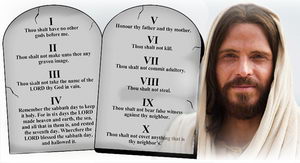 In both Hebrews and Jeremiah, we are told that the people would not faithfully keep God’s Commandments. In response, God established a new covenant, promising to write His law on our hearts and in our minds, so that we would never forget it. The only change with the law is where it is now inscribed, within our hearts and minds.
The true test of love is obedience. Do you love Jesus enough to obey Him? He loved you enough to die for you, and His plea today is that you keep His Commandments, and not find them burdensome. Keeping them will protect you from trouble, bring joy and happiness, and provide blessings far beyond measure. Revelation 22:14, “Blessed are they that do his commandments, that they may have right to the tree of life, and may enter in through the gates into the city.” God’s way of willing obedience is the best way, and if Jesus is Lord of your life, He will give you the strength to keep His Commandments.
Jesus said, “If you love me, keep my commandments.” John 14:15